

A Chromebook issued to a state school student in Goiás, Brazil, in May 2024. Illustrative. Image: Emerson Júnior Gonçalves da Silva Figueiredo / Wikimedia Commons, CC BY-SA 2.0, cropped

Schools that want AI kept away from their students will soon face a blunt choice from Google: accept Google Search with its AI built in, or lose Search altogether. In a blog post on Tuesday, Google said Gemini, Gemini Notebook, Gemini in Classroom and Google Search will all be “entirely off” for K-12 student accounts until school administrators explicitly turn them on. Its education chief has made clear that switching off the AI means switching off Search too.
What Google is changing
The post, by Chris Phillips, Google’s vice president and general manager of education, walks back the company’s push to put Gemini in front of every student. Google switched Gemini on for students by default earlier this year, which caught many school districts off guard and fed a backlash from parents and teachers. Google says it is changing course “after listening to schools, teachers, leading researchers, and policymakers”.
Under the new approach, each of the four products starts switched off for K-12 student accounts and has to be enabled by an administrator. Google says it will “share more specifics with schools in the coming months” before the change rolls out. Chalkbeat reports that Google will start testing the changes with a small group of US schools this month and roll them out more widely early in the new year.
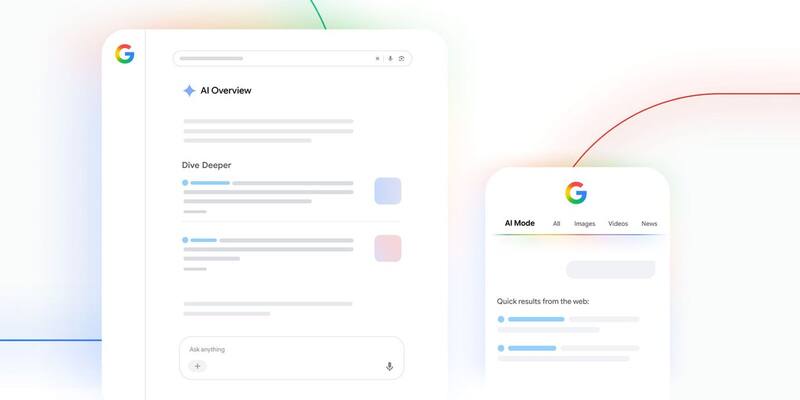
The other half of the announcement is Guided Learning, a Gemini mode that coaches students with questions and step-by-step breakdowns instead of handing over answers. It is available worldwide in Google Classroom from today, and Google is building it into Search for student accounts, starting with a pilot in selected US schools later this month. Google’s example: a student who pastes in a physics problem or asks for help with a book report will get prompts to work through it, not the finished answer. Chalkbeat reports that Guided Learning will replace AI Overviews when students search on school accounts.
“They have the choice to not have Search on at all”
What Google’s post doesn’t spell out is that Search can’t be separated from its AI. Phillips told Chalkbeat that AI is deeply integrated into Google Search and cannot simply be turned off, so a school that wants no AI will have to give up Search for its students:
If a school is not comfortable with that and simply wants AI off, then they have the choice to not have Search on at all.
Chris Phillips, vice president and general manager of education at Google, to Chalkbeat
Phillips said Google is “excited” the changes “will promote that productive struggle” and help students learn.
A choice few schools can make
Child-safety campaigners have been asking for exactly the control Google is now refusing. In July, Common Sense Media’s Youth AI Safety Institute rated AI Overviews and AI Mode an “unacceptable risk” for children after more than 2,600 searches on accounts set up for 11 and 15-year-olds. It found AI Mode produced full answers to all 180 homework assignments it tested, missed clear signs of children in crisis, and noted that schools and parents can’t switch the AI answers off. It asked Google to turn them off by default for minors and give schools controls that don’t exist.
Eisha Buch, head of teaching and learning at Common Sense Media, told Chalkbeat that dropping Search isn’t a realistic option for most schools:
The likelihood of schools and students avoiding Google Search is really slim to none.
Eisha Buch, Common Sense Media, to Chalkbeat
Pressure has also come from Washington. Last month Senators Josh Hawley and Richard Blumenthal wrote to Sundar Pichai asking why Google’s AI can’t be switched off on school Chromebooks, with answers due on November 2. Google hasn’t said whether Tuesday’s changes are part of its reply. Some of the biggest US districts, including New York City and Los Angeles, have already restricted student use of AI.
Who it affects
The changes apply to K-12 student accounts in Google Workspace for Education, which schools use around the world, from the US, Canada and the UK to Germany, Australia, Brazil and India. Google says Google Classroom alone is used by 150 million students and teachers worldwide. Guided Learning in Classroom is global now; the Search pilot is US-only for the moment, and Google hasn’t given dates for other countries. The new default applies only to K-12 student accounts, not to teachers.
Update: Google says schools are “in control” as Mamdani, Sanders and Lina Khan pile in
Google posted a clarification on X on Tuesday evening, saying its announcement gives schools “more choice, not less”. Gemini, Gemini Notebook and Search will be off by default, and schools can turn on “one, two, or all of these services individually”. AI Mode and AI Overviews in school Search will offer step-by-step guided learning “so that students don’t get quick answers to schoolwork”, Google said. The post doesn’t say whether a school can switch Search on without its AI, the point critics seized on.
New York City Mayor Zohran Mamdani wrote that Google “is trying to use its monopoly power to force AI into our public schools”. Former FTC chair Lina Khan said Google is “using its search monopoly to coerce schools into adopting AI”, and that the move shows it “remains unchastened” after courts found it broke antitrust law. Senator Bernie Sanders went further:
President Trump claimed that AI oligarchs could regulate themselves because they “love our country.”
— Sen. Bernie Sanders (@SenSanders) November 3, 2026
Now, Google is threatening schools: if you stop your students from using AI, we will cut off your access to Google Search.
That’s not love. That’s extortion.
PAUSE AI NOW.
Update: Senator Ed Markey tells Google to let schools turn off AI and keep Search
Senator Ed Markey wrote to Sundar Pichai on November 9, demanding that Google reverse its policy of cutting off Search for K-12 student accounts at schools that disable its AI services. The Massachusetts Democrat, who sits on the Senate Commerce Committee, pointed to the lawsuit filed this month by a girl and her family, who allege Gemini “helped coach her through a plan to commit suicide” after she reached it through Search on a school Chromebook, even though her school had blocked the Gemini app and website. In the letter, he wrote:
Google is recklessly forcing AI on schools and treating kids like collateral damage. Schools deserve the right to block student access to AI chatbots without also forfeiting access to an important educational tool.
Senator Ed Markey, letter to Sundar Pichai
Markey asks Google to say by November 30 whether it will let schools switch off AI Overviews, Gemini and Guided Learning while keeping Search, and whether that is technically feasible. He also wants any research or risk assessments Google has done on how these features affect K-12 students, including children under 13, and a count of the schools and districts that already restrict students’ access to AI outside Search. Google hasn’t publicly responded to the letter.
Update: Chicago Public Schools blocks Gemini, ChatGPT and Claude for students
Chicago Public Schools, one of the largest school districts in the US, is blocking generative AI tools for all its students, a CPS spokesperson told CBS Chicago on November 10. Apps such as Gemini, ChatGPT and Claude will be blocked on CPS-issued devices and on the district’s network, for “student privacy and safety”. The district said it “has blocked unapproved, third-party AI products from the District network” to comply with privacy laws including FERPA, COPPA and Illinois’s SOPPA, and that it has “no plan to add generative AI tools to CPS students’ devices”.
CPS said it has not yet decided how to respond to Google’s rule that schools which turn off its AI also lose Search. An Alphabet spokesperson told CBS that Google’s AI features are now so tightly built into Search that it can’t offer Search to students without them.
Update: New York City Council asks Pichai if its schools will keep Search
New York City Council Speaker Julie Menin and Council Member Shekar Krishnan, who chairs its oversight and investigations committee, wrote to Google chief executive Sundar Pichai on November 12. They want written answers by November 19 on whether the city’s public schools can keep using Google Search without opting into AI Mode, AI Overviews or other student-facing AI tools, and if not, why Google can’t offer a student version of Search without AI, as it did with YouTube Kids. The letter also asks whether Gemini collects student data and what Google does about inaccurate AI answers.
Mamdani’s one-year moratorium on student AI use covers pupils from 2-K to eighth grade, so they could lose Search under Google’s rule. “The City Council will not permit Google or any private firm to abuse its market power to force its products into classrooms”, Menin and Krishnan said in a joint statement.
Update: New Jersey governor accuses Google of trying to “strongarm” schools
New Jersey Governor Mikie Sherrill’s office has joined the criticism, in a statement to NJ.com. Students in most of the state’s more than 600 school districts use Google’s products and Search on school Chromebooks, and some districts, such as Haddonfield, ban generative AI for younger pupils.
“Google’s decision to strongarm school districts into exposing young learners to AI by threatening to cut off access to its search engine undermines that ability and puts corporate interests ahead of our kids”, a spokesperson for Sherrill said, adding that the state “must have the ability to make local decisions about student well-being, online safety, and healthy technology use.” Google hadn’t commented to NJ.com.
Update: More than 540 Google workers ask Pichai to let schools keep Search without AI
Google’s own staff have joined the pushback. More than 540 Google employees and contractors have signed a letter to Sundar Pichai, Search head Elizabeth Reid and education chief Chris Phillips asking them to “reconsider this decision, and allow schools to turn off AI features in Search without disrupting their ability to use search as a whole”, Bloomberg reported on November 19. The Alphabet Workers Union (CWA Local 9009), which organised it, had urged Googlers on November 9 to sign an internal petition, saying Google was “forcing teachers, students, and parents into an impossible choice.”
“Any opportunity to drive positive change with AI in education will rely on educators having the freedom to choose how to implement it in their curriculum,” the union said in a statement. “Cutting off access to Search for schools that don’t wish to use AI will not help persuade our users, and will more likely result in them shutting out Google products altogether.” The full letter hasn’t been published. Google didn’t immediately comment, and no reply to the New York City Council, whose questions were due on November 19, has been made public.
Why it matters
Google is giving schools an off switch for its AI, but tying it to the tool students use most for research on school laptops. Since few schools will give up Search, most students will keep getting AI in their results, now in Guided Learning form, on Google’s terms rather than their school’s.
Sources: Google (Chris Phillips); Chalkbeat (interviews with Chris Phillips and Eisha Buch); Common Sense Media; X posts by Google, Zohran Mamdani, Bernie Sanders and Lina Khan; Senator Ed Markey (letter); CBS Chicago (CPS and Alphabet statements); New York City Council; NJ.com (Governor Sherrill’s office statement); Bloomberg (workers’ letter); Engadget (Alphabet Workers Union statement); Alphabet Workers Union on Bluesky.
Latest Google news